How I See Austin: A Simple Framework for Choosing the Right Area
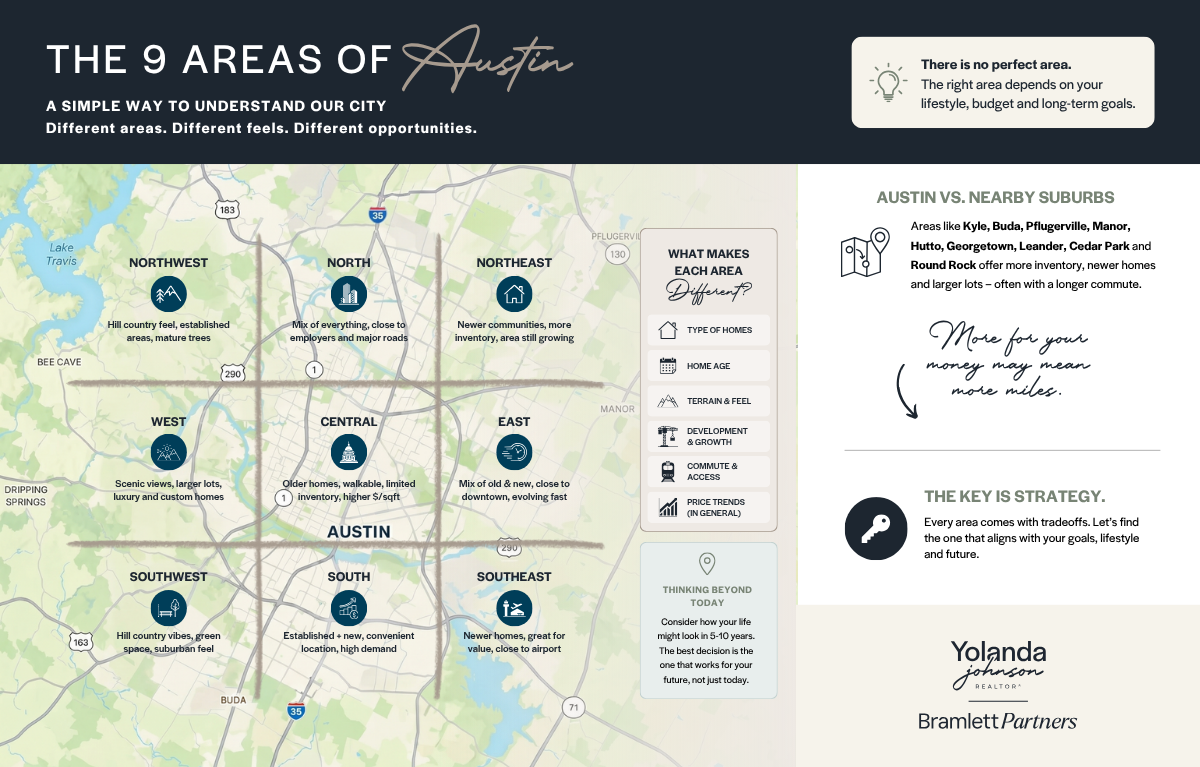
If you're thinking about buying a home in Austin, one of the first things you'll realize is that Austin is not just "Austin."
Every area feels different.
The homes, terrain, commute, development, property taxes, traffic patterns, and even the pace of growth can change dramatically depending on where you are.
As a local Realtor who grew up in South Austin, one of the ways I mentally picture Austin is almost like a hashtag or tic-tac-toe board divided into 9 sections. Each section has its own opportunities, tradeoffs, and personality.
Many buyers spend most of their time focusing on the house itself. I encourage them to spend just as much time thinking about the area. A home may be perfect today, but will it still fit your lifestyle 5–10 years from now?
This guide is meant to give you a simple framework for understanding Austin and the nearby suburbs.
There Is No "Best" Area
One thing I always tell buyers is this:
There is no perfect area.
Every part of Austin comes with tradeoffs.
Some buyers prioritize:
shorter commute
newer homes
larger lots
lower tax rates
walkability
hill country views
proximity to work
future growth
being closer to family
The right area depends on your goals, budget, lifestyle, and long-term plans.
Your version of Austin may look very different from someone else's.
How I Divide Austin
When I think about Austin, I generally break it into 9 main sections:
Northwest Austin
North Austin
Northeast Austin
West Austin
Central Austin
East Austin
Southwest Austin
South Austin
Southeast Austin
This isn't meant to be a perfect map. It's simply a practical way to understand how different Austin can feel depending on where you're looking.
Northwest Austin
Think established neighborhoods, mature trees, larger lots, and limited new construction. Buyers often explore this area for its established feel and access to major employers.
North Austin
A mix of older and newer communities with excellent access to major roads, The Domain, and Austin's tech corridor. One of the most diverse areas in terms of housing options.
Northeast Austin
One of the fastest-growing parts of the city. Buyers often find newer homes, more inventory, and opportunities to get more home for their budget.
West Austin
Hill country terrain, larger lots, custom homes, and scenic views. Geography plays a major role here, and so do commute considerations.
Central Austin
Location is often the biggest draw. Expect older homes, smaller lots, walkability, and proximity to downtown, often at a higher price per square foot.
East Austin
A mix of old and new, with ongoing redevelopment and a variety of housing styles. This area continues evolving and can feel very different from one street to the next.
Southwest Austin
Known for its hill country feel, green space, and suburban atmosphere while still being within Austin city limits.
South Austin
A blend of established neighborhoods, newer developments, local businesses, parks, and trails. As someone who grew up here, I've seen this area change tremendously over the years.
Southeast Austin
An area that continues to grow rapidly with newer communities, airport access, and proximity to major employment centers and future development.
Don't Forget the Suburbs
One of the biggest shifts I've seen over the past several years is buyers expanding their search beyond Austin city limits.
Areas like:
Buda
Kyle
Round Rock
Georgetown
Leander
Cedar Park
Pflugerville
Hutto
Manor
Often offer buyers:
newer homes
larger lots
more inventory
master-planned communities
more house for the money
The tradeoff is usually commute and distance.
For many buyers, however, that tradeoff is worth it.
What Buyers Should Consider
When choosing an area, I encourage buyers to think beyond the home itself.
A few things worth considering:
Commute time and traffic patterns
Property taxes
HOA costs and amenities
Home age and maintenance
New construction versus resale
Insurance costs
Future development nearby
Long-term resale potential
How your lifestyle may change over the next 5–10 years
Sometimes two homes with the same purchase price can have very different monthly costs because of taxes, insurance, HOA fees, or commute expenses.
Things Buyers Sometimes Regret Not Thinking About
Some of the most common things I hear after a purchase are:
"I didn't realize the commute would be this long."
"I wish I had considered future growth nearby."
"I focused too much on the house and not enough on the location."
"I didn't compare property taxes closely enough."
"I should have thought more about my future plans."
Buying a home is one of the largest financial decisions most people will make. It's worth taking the time to think beyond today's needs.
Final Thoughts
Austin continues to grow and change quickly.
What is considered affordable, developing, or convenient today may look very different years from now.
That's why I believe in buying with strategy.
Not just choosing a house, but choosing an area that supports your lifestyle, budget, goals, and future plans.
Every area in Austin offers something different.
The key is finding the one that fits your life today and the one you're building for tomorrow.
If you're relocating to Austin or trying to narrow down where to focus your search, I'd be happy to help you understand the opportunities and tradeoffs of each area.
Information is general and subject to change. Buyers should conduct their own research regarding schools, taxes, commute times, insurance, HOA information, and future development plans.